The brain itself famously does not have sensory nerves, so your headache has to come from other tissues. The usual suspects include structures in the cranium that are innervated to include the scalp, the bones of the cranium, the joints of the cranium which includes not only the obvious joints of the TMJ, but also all the sutures of the skull, the ligaments that hold the joints together, including the teeth in their sockets and the meninges, the tissues that surround the CNS especially the dura. The dura is a tough casing that blends with the periosteum (the innervated casing around bones) and keeps the cerebrospinal fluid in place as it circulates via currents around the CNS.
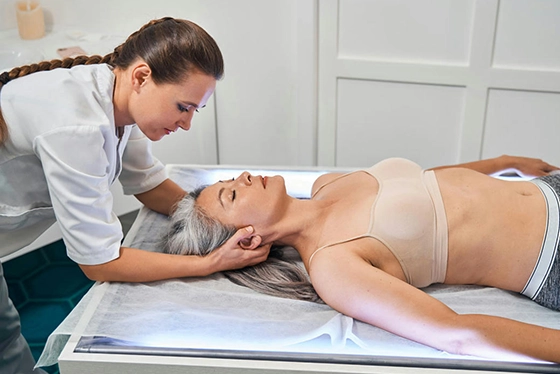
The presence of joints in the cranium implies movement which in fact a treating osteopath or therapist needs to be able to feel as part of diagnosing abnormal movement patterns and relationships between the individual bones. The bones of the skull are thin and flexible. Many people think of bones as the white brittle structures one might find in the woods, but living bone is more like a sapling than it is like a 2×4. Flexibility is essential for the cranium to move the way it physiologically needs to.
So, headache pain can come from jamming or twisting of the joints in the head. This is often secondary to trauma. It can come from nerves which are impinged or stretched that supply structures in the head. This includes cranial sensory nerves which come from within the skull to innervate the dura, sutures and other joints, or leave the skull and innervate the scalp and face. There are also nerves that star in the neck and primarily supply the posterior part of the head so neck issues can also create headaches. The autonomic/involuntary nervous system which is in the neck and upper thorax can also contribute to headaches, sometimes via nerve pain and sometimes via impacting the blood supply so regions are low in oxygen and nutrients leading to ischemic pain.
Trauma to the head and neck may lead to pain, but trauma to other areas of the body can also cause pain via tension and distortion of movement patterns of the skull from connective tissue attachments to the skull from areas elsewhere in the body. The gut has an attachment to the inferior surface of the skull. There are fascial/myofascial chains that insert on the skull that flow to the pelvis and ribs. The dura is strongly attached to the posterior skull and upper neck and then is supposed to be free until the dura is strongly attached to the base of the sacrum in the pelvis. Most of the blood supply to the skull and brain is going to arrive vi the carotid and vertebral arteries. If there is tension in the vasculature that, too, will limit normal motion and physiology of the skull and can sometimes impact brain fog as well. It is possible to have chronic headaches from residuals of an ankle sprain creating fascial tension going to the side of the skull. Trauma doesn’t have to be a direct blow to the cranium. Traumatic shock waves travel through the body and reflect off the skull before flowing back into the body. The arrival and absorption/reflection of that traumatic wave can change the function and mobility of the cranium, the result being a headache.
As an osteopath my job is to recognize all the areas of the body, cranium, neck, ribs, etc. that potentially may be involved in causing headache symptoms and to come up with a plan to order treatment as effectively as I can. I then work with your body to correct the areas of dysfunction. As the dysfunctions clear, symptoms are usually brought under control. The headaches I have the most difficulty impacting are hormonally related migraine headaches. In my opinion it is still worth trying to treat the biomechanical dysfunctions to reduce triggers for the migraines which often decreases frequency and severity of the migraines.
My usual caveat, as always is that regardless of your issue that osteopathic treatment will consider the whole body and person to bring about the most health possible for you in a biomechanical way.