Expert Providers
One-on-One Care
Pain Relief
Natural Solutions
Better Mobility
Long-Term Wellness
One-on-One Care
Natural Solutions
Long-Term Wellness
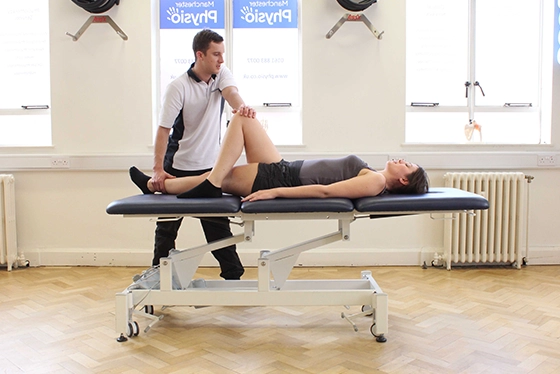
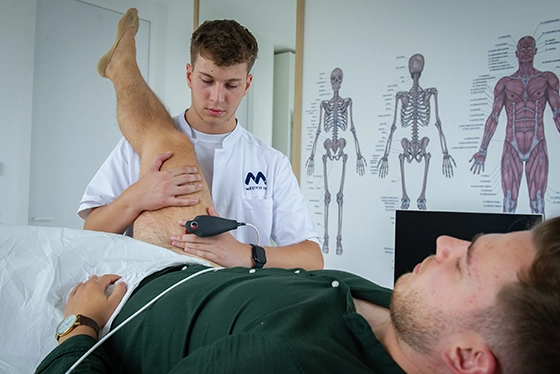
Groin or pelvic pain can make walking, sitting, or changing position uncomfortable. Some people also feel pain near the S-I region, across the belt line, or into the upper leg. These symptoms may relate to changes in how the sacrum, pubic bones, and nearby tissues move.
At Madison Manual Medicine, we provide groin pain treatment in Middleton, WI with osteopathic manual therapy that focuses on barriers affecting normal motion. The sacrum moves around several normal axes, and restrictions along these axes may affect comfort. The pubic bones may also shift up or down, move front or back, or rotate in opposite directions.
During care, we assess structures that may contribute to discomfort patterns. Our hands-on approach may address:
For symptoms centered deeper in the pelvis, our pelvic pain treatment in Middleton, WI is guided by the movement barriers found during the visit. Some pelvic dysfunctions may also affect bladder control, so symptom patterns matter when evaluating how these structures function together.
Our goal is to improve movement where restrictions are present without forcing the body. By addressing mechanical changes that may contribute to discomfort, groin pain relief in Middleton, WI becomes part of care focused on easier movement and better overall daily function. That mechanical assessment also helps us consider deeper tissue factors that may contribute to persistent pelvic symptoms.
Persistent pelvic discomfort is not always limited to joints and bones. Blood vessels, connective tissues, and postsurgical adhesions can also influence how the region moves. This matters when pain continues despite rest or develops after surgery or conditions such as endometriosis.
At Madison Manual Medicine, our osteopathic pelvic pain treatment in Middleton, WI can include assessment of tissue restrictions involving the iliac arteries and their branches. These branches include vessels associated with the groin, pelvic floor, inner thigh, buttocks, uterus, and rectum. We use hands-on treatment according to the restrictions identified and tissue response during care.
Relevant structures in this region may include:
Adhesions are another source of restricted tissue motion. Endometriosis can lead to adhesions in women, and surgery may also leave tissues less mobile. Appendectomy and hysterectomy are examples where postsurgical adhesions may be present. In some cases, these restrictions can be partly released through careful manual work.
For patients with groin symptoms linked to these tissue restrictions, our manual therapy for groin pain in Middleton, WI allows us to work directly with areas that show reduced mobility. Our care is based on what we find rather than a fixed routine.
For people seeking care without an operative procedure, non-surgical pelvic pain relief in Middleton, WI gives us a hands-on option for addressing treatable restrictions. Call Madison Manual Medicine at (608) 512-7177 to schedule a visit with Dr. Jed Downs.