Expert Providers
One-on-One Care
Pain Relief
Natural Solutions
Better Mobility
Long-Term Wellness
One-on-One Care
Natural Solutions
Long-Term Wellness
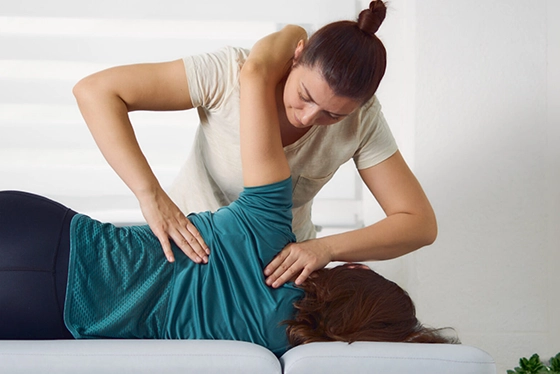
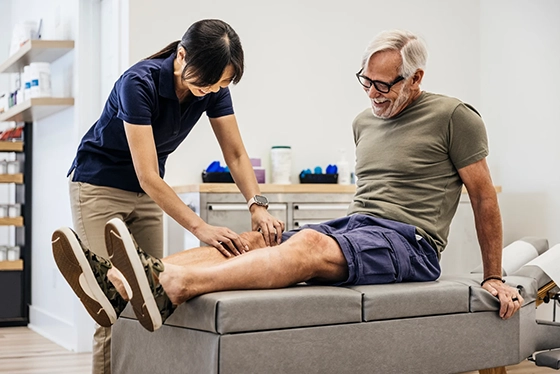
A stiff neck can make driving tiring. A sore back can turn desk work into a struggle. When you need an osteopath in Middleton WI, Madison Manual Medicine studies how joints, muscles, fascia, nerves, vessels, organs, ribs, and the spine influence one another. Trauma can leave strain away from the painful area, so the exam follows body connections.
For headaches, cranial osteopathic models consider the skull, sutures, meningeal layers, and cerebrospinal fluid circulation. The pia follows the nervous system, the arachnoid lies within fluid, and the sensitive dura attaches inside the skull. Dural tension, compression, or trauma may accompany headache, fatigue, or brain fog, although cranial mechanisms remain debated rather than proven causes.
Our osteopath in Middleton WI, also screens the neck, jaw, pelvis, ankles, chest, and fascial lines because distant restrictions may affect head comfort. Cervical vertebrae meet through discs and paired facet joints, while muscles, ligaments, arteries, and nerves cross the region. Restricted rotation, side bending, or blood-vessel strain after whiplash may contribute to stiffness and requires careful medical assessment.
Our osteopath in Middleton begins with your history, symptoms, injuries, surgeries, work demands, and movement limits. We watch standing, walking, reaching, breathing, and weight shifts, then careful touch assesses guarded tissues, joint motion, or tender areas.
Low-back pain may involve the lumbar spine or sacroiliac joints, yet it can also reflect lower-thoracic restriction, a stiff hip or knee, or tension where kidneys, liver, and colon attach near the posterior abdominal wall. Vertebrae can become held in combined rotation, side bending, flexion, or extension, prompting protective muscle spasm.
Our osteopath in Middleton also checks chest mechanics. Ribs two through ten connect with vertebrae, cartilage, and sternum. Ribs, cartilage, diaphragm, or lung-facing tissues may lose motion after impact, pneumonia, COVID, surgery, or guarding. Chest pain requires medical evaluation before treatment.
People searching for the best osteopath in Middleton WI, may report pelvic, groin, arm, or leg symptoms. The sacrum moves on several axes, while pubic bones can shear or rotate. These changes may be felt at the sacroiliac joints, belt line, groin, pelvic floor, or leg and affect bladder control.
Common reasons people seek care include:
Through osteopathic medicine in Middleton WI, the exam may consider iliac, inguinal, pudendal, obturator, and gluteal vessels alongside muscles, joints, nerves, and scars. Pelvic adhesions can follow endometriosis, appendectomy, hysterectomy, or surgery; some may respond to mobilization, while others require medical care.
Wrist, ankle, foot, knee, and hip injuries may leave compaction, shear, rotation, scar adhesion, or altered kneecap tracking. Upper-limb tingling may involve neck, upper-rib, chest-fascia, vascular, or brachial-plexus tension in thoracic outlet patterns. Treatment depends on examination, diagnosis, safety, and response.
Our osteopathy treatment in Middleton WI, involves hands-on methods chosen for findings, comfort, and safety. Indirect technique moves tissues toward ease. Direct technique meets a barrier and waits for softening. Articular work positions, compresses, then guides correction.
Muscle-energy technique uses a contraction followed by stretching, repeated several times. Osteoarticular work may add a high-velocity, low-amplitude thrust, with or without a click. Strain-counterstrain holds a position for 90 to 120 seconds before reassessing motion.
Myofascial release may work directly, indirectly through unwinding, or across mixed barriers. Lymphatic methods address diaphragms and pathways that may restrict fluid movement. Biodynamic approaches describe directing fluid through a barrier, but their quantum explanation is theoretical and unproven.
Every method requires contact, layer palpation, and responsive hands rather than a fixed routine. Mild soreness can occur, yet sudden weakness, major trauma, chest pressure, loss of bladder or bowel control, severe headache, or rapidly changing nerve symptoms need urgent assessment. Madison Manual Medicine explains findings, gains consent, adapts pressure, and checks movement after each step.

The same practitioner follows changes in headache patterns, breathing, rib motion, spinal mechanics, scars, and limb control. That continuity helps separate gains from reactions, spot recurring restrictions, and adjust each visit without making you repeat your entire medical story.

Subtle findings can connect distant symptoms. We compare jaw tension, cervical motion, pelvic balance, pulse quality, fascial pull, joint spring, and walking patterns. Those clues help identify whether local pain reflects nearby restriction, an old injury, surgical adhesion, or strain elsewhere.

Symptoms are taken seriously without forcing a single explanation. Our osteopath in Middleton WI, considers your examination, history, imaging, red flags, and limits before treatment. Guarded tissues receive time to respond, while progress is measured through comfort, motion, and useful function.
Not always. Indirect, myofascial, lymphatic, articular, muscle-energy, and strain-counterstrain methods may use gentle pressure or positioning. A high-velocity, low-amplitude technique can produce a click, but sound is not required for correction, and consent comes first during treatment.